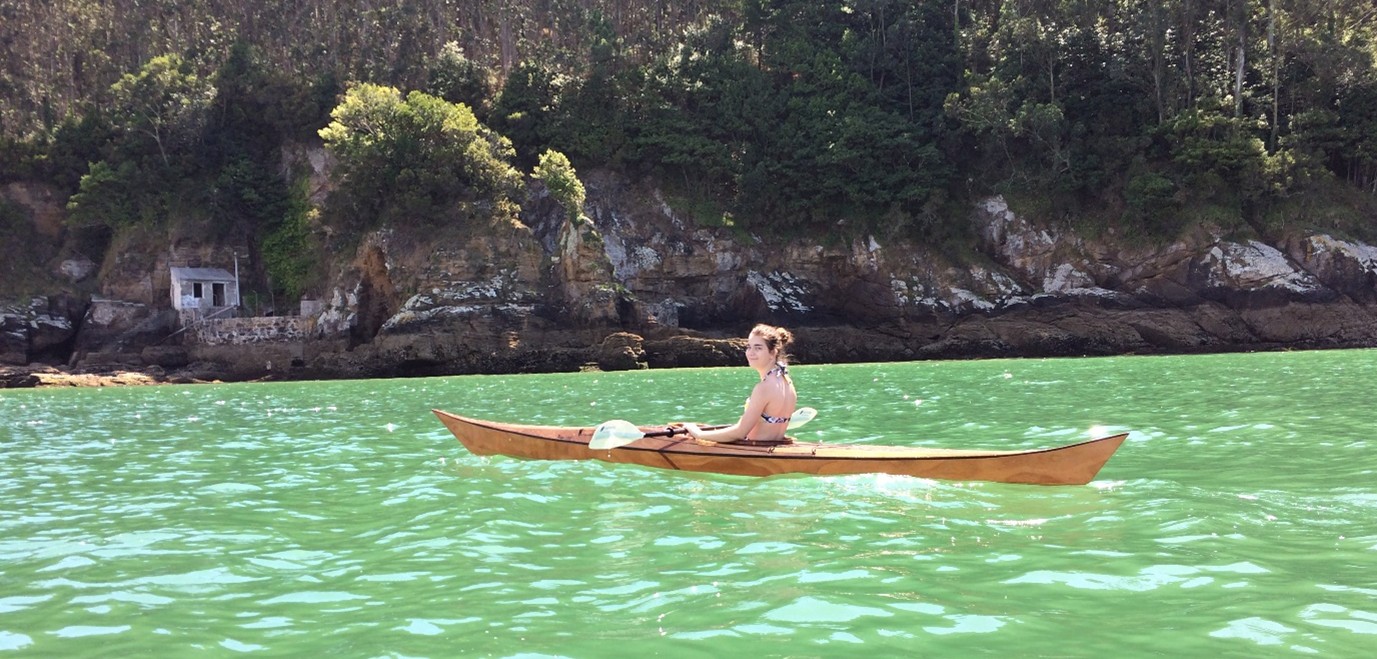
Balanced Design of a Sea Kayak
Balance
A balanced kayak design does not depend on a single factor, but on the technical compromise between three pillars: stability, speed, and maneuverability. To achieve this, designers adjust the hull geometry and volume distribution based on the intended use.
Hull Geometry: Stability vs. Speed
The fundamental balance between these two characteristics depends on the beam, length, and hull shape of the craft:
- Beam (width): A wider kayak provides greater primary stability (a feeling of firmness in calm waters). However, it increases wetted surface area, reducing speed.
- Length: Longer kayaks track better (tracking) and are faster, but sacrifice maneuverability in tight spaces.
- Hull shapes:
- Flat bottom: Maximum initial stability (recreational/fishing).
- V-shaped hull: Cuts through the water better and increases speed, but feels “twitchy” or unstable to beginners.
Primary vs. Secondary Stability
A balanced design for sea or open waters with waves prioritizes secondary stability. This allows the kayak to lean sideways without immediately capsizing, facilitating turns through edging. A kayak with more volume in the ends will have a smoother transition in this stability compared to one with very fine ends.
Volume Distribution and Load
Physical balance once afloat depends on the Center of Gravity (CG) and the Center of Buoyancy (CB):
- Central loading: To maintain longitudinal balance, heavy gear should be placed near the center of gravity (close to the seat).
- Trim: If there is too much weight in the bow, the kayak will be hard to steer; if too much weight is aft, the bow will lift and wind will affect navigation more.
Ergonomics and Paddler Control
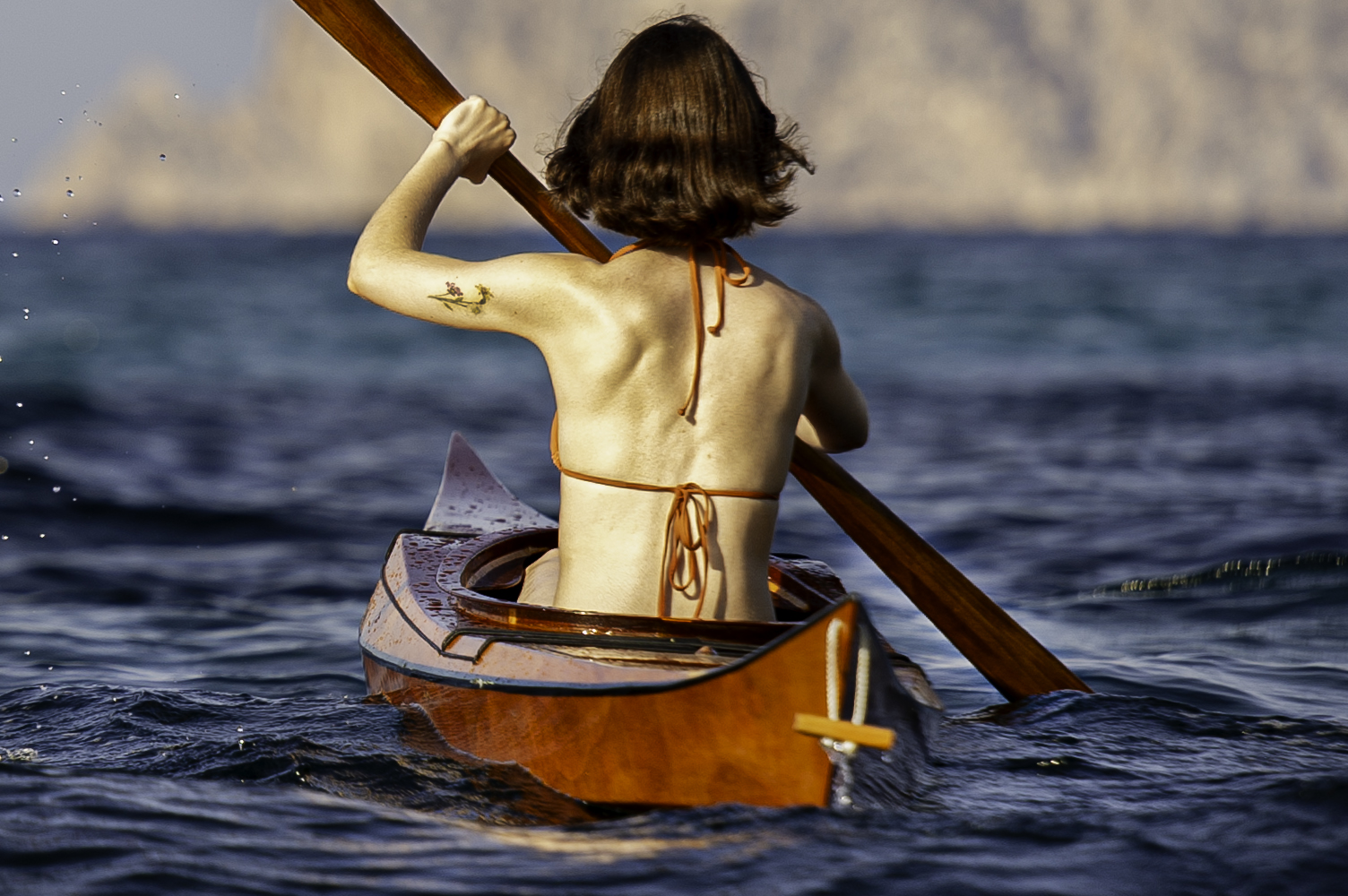
The design must allow the body to act as a “pendulum”:
- Separation: The lower body (hips and knees) must stay in contact with the kayak to control it, while the torso remains relaxed to absorb water movement.
- Contact points: A good design includes thigh braces and adjustable footrests that allow efficient transfer of paddling energy to the boat.
Balancing Maneuverability and Straight-Line Tracking Through Good Design
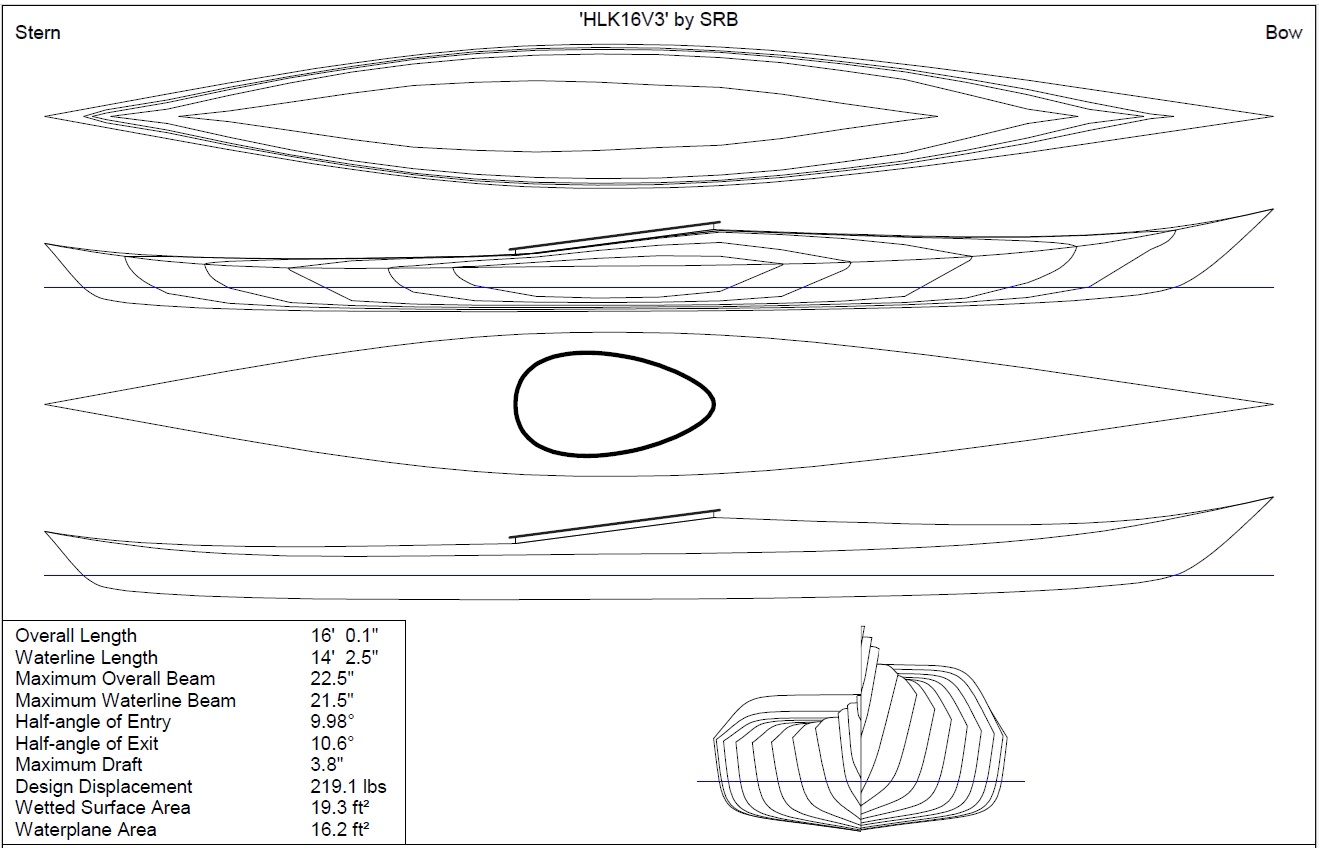
To simultaneously maximize maneuverability and tracking (the ability to go straight), kayak design must play with rocker, hull shape, and mechanical accessories.
In naval design, these two characteristics are technically opposite: what improves maneuverability usually harms tracking.
Rocker, the Key Factor
Rocker is the longitudinal curvature of the hull (similar to the base of a rocking chair).
- For Maneuverability: A pronounced rocker (raised bow and stern) reduces contact surface at the ends, allowing the kayak to turn almost on its own axis.
- For Straight Tracking: Minimal or no rocker keeps more hull in the water, creating a natural “guide” that resists sideways deviation.
A “reasonable” rocker value for balancing ease of turning and straight tracking is low to moderate rocker. There is no universal measurement in centimeters or inches, as rocker works together with length and overall hull shape.
Balance is achieved through a design that minimizes rocker to maintain good water contact (which helps tracking), while still allowing easy maneuvering when necessary, often through edging.
| Feature | Low/Moderate Rocker | High/Pronounced Rocker |
|---|---|---|
| Ease of Turning | Moderate (requires edging or rudder) | High (turns easily) |
| Straight Tracking | High (good tracking) | Low (tends to wander) |
| Typical Use | Touring/Recreational kayaks | Whitewater kayaks |
Rather than an absolute measurement, rocker depends on the intended use of the kayak:
- Touring Kayaks: Designed for long distances, often in straight lines, where cruising speed is essential. They have very low rocker to maximize waterline length, achieving excellent speed and tracking in open waters. Maneuverability is managed mainly through edging or a rudder/skeg. Example: Xian Series (153 and 160).
- Recreational Kayaks: Feature low to moderate rocker. Wider and often flat-bottomed, offering primary stability and sufficient maneuverability for calm lakes and rivers, though not particularly fast. Example: Double Brual Series (140 and 151).
- Versatile Kayaks (River Running/Crossover): Actively seek balance. They have moderate rocker—flat enough to track in calm sections, but with enough curve in bow and stern to turn quickly in moderate rapids. Example: Single Brual 120.
Hull Shape and Keel
- V-shaped hull: A pronounced V-shaped keel in bow and stern acts like a blade cutting through water and helping maintain course.
- Chines: Hard chines (defined lateral edges) allow the hull behavior to change when edging, enabling tight turns without losing straight-line performance when flat.
Hybrid (Mechanical) Solutions
The most effective way to achieve the best of both worlds is through accessories that modify the original design:
- Retractable Skeg: A fin lowered from the stern. When deployed, the kayak tracks straight like an arrow; when retracted, natural rocker-based maneuverability returns.
- Rudder: Allows constant course correction via pedals, enabling a more maneuverable hull design (with more rocker) without sacrificing straight-line efficiency.
If opting for low/moderate rocker for tracking, the standard technical solution in strong wind is the retractable skeg.
The Effect of Freeboard in Wind
Wind is always present in open-water paddling. What makes a kayak hard to control is excessive freeboard (the height of the sides). A balanced design should have:
- Low profile so wind passes over it.
- Fine ends that do not act like sails.
Beyond hull shape and height, the paddler is the largest “sail”. Sitting high, the torso generates massive aerodynamic resistance that no low-profile design can fully eliminate.
Aesthetics vs. Performance
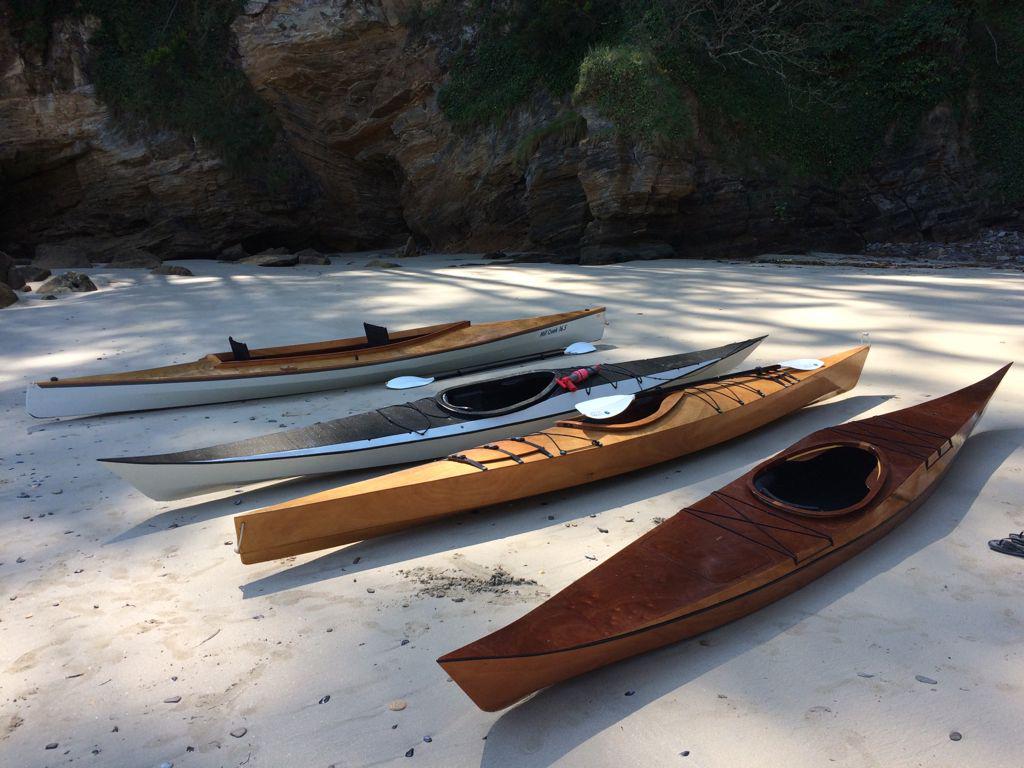
A good design maintains balance between technical performance and a final aesthetic that elicits that inevitable “WOW!!” when a wooden kayak rests on the sand.
“Kayaking is an aesthetic experience. The look of a kayak matters, not only because things that look better often work better in practice, but because we build a kayak and go out on the water because it is beautiful. We want to be inside a beautiful object while doing something beautiful.” — Nick Shade